“Have you got any jobs?” Elisa Anniss on Luxury Journalism and Its Glamour
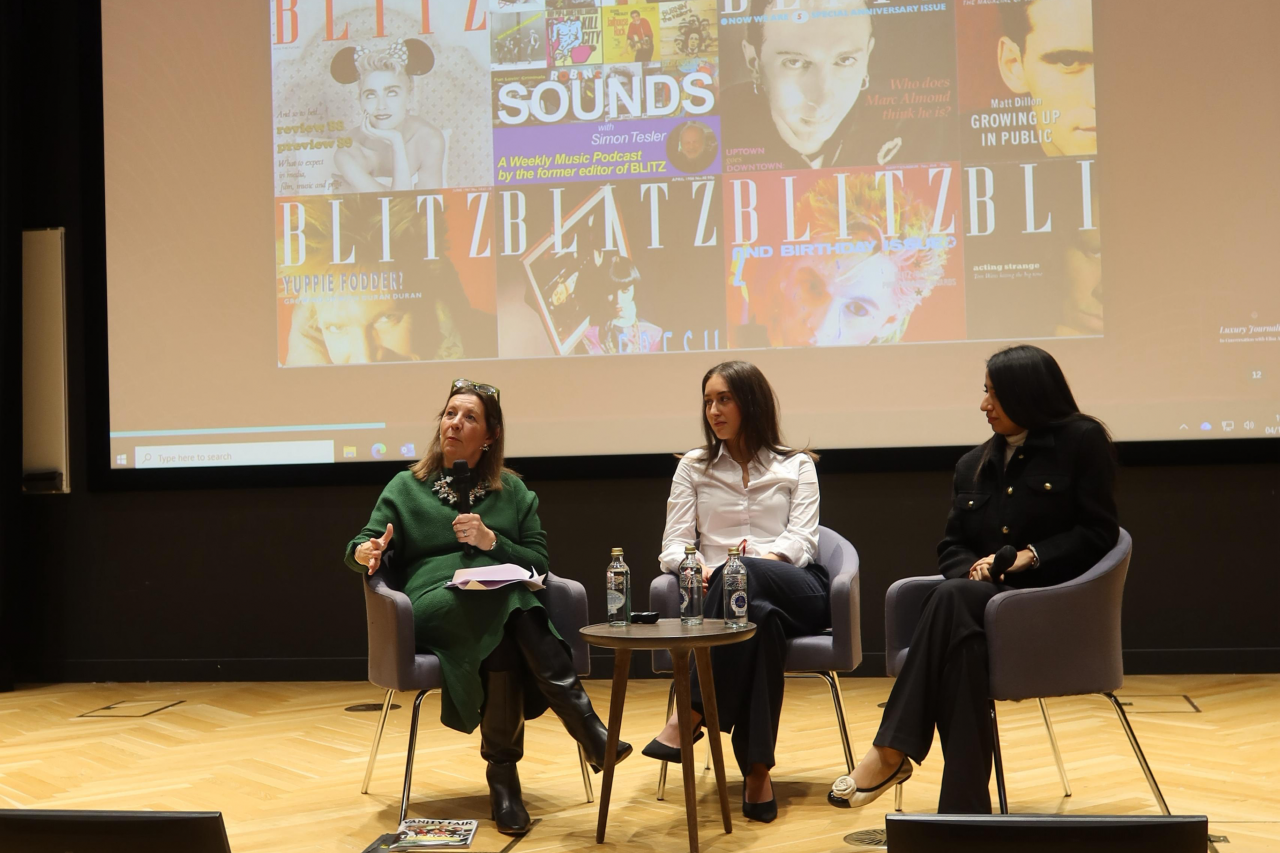
A picture of the event. Source: Janice Chian
Luxury journalists are often mistaken for having glamorous lifestyles, connections to prominent industry figures, and easy access to front-row seats at Fashion Week. Yet for Elisa Anniss, a London-based luxury lifestyle journalist, copywriter, and University lecturer at the London College of Fashion, the craft of writing about luxury has always been grounded in research and resilience rather than spectacle. In December 2025, King’s Business Review had the pleasure of attending Luxury Industry Society’s guest speaker event with Elisa Anniss. From her humble beginnings at Blitz Magazine in London to her role at Footwear News in New York, Anniss has established herself as a specialist in fine jewellery, accessories, and shoes. Her inspiring career demonstrates that journalism careers are rarely linear but are built over time through expertise and persistence.
Finding a Way In
Despite her success, Anniss realised she wanted to work in fashion after graduating from University. After completing her A-Levels in English, History, and Sociology, she went on to complete a University degree in History and Sociology. Her studies proved helpful when she attended a conference in Lisbon about royal treasures, where she was able to analyse jewellery with her knowledge of European monarchies. This inspires students who aren’t specialised in fashion at an academic level and demonstrates how knowledge from other subjects can assist their contemporary writing.
Anniss’s first jobs in London were crucial in helping her understand how the publication industry, which was much more active when she first began working, functioned as both a creative and a commercial entity. After working in advertising and sales for Blitz Magazine, she was hired as a fashion editor at Shoe & Leather News, a move that proved crucial to her career. Her presence at various trade shows across Europe established her position as a specialist in the shoe industry.
Anniss then spent 16 years in New York at Footwear News, a weekly publication that interviewed up-and-coming figures in the fashion industry, including Tom Ford at the time. She was hired at a trade show in Las Vegas, where Anniss approached their editor and directly asked, “Have you got any jobs?”. This simple statement demonstrated how confidence and persistence can open doors in the journalism and fashion industries.
Industry Insight
Although Anniss described how working in New York differed sharply from the provincial atmosphere of London, she returned to London and worked with a Paris-based buying office for over three decades. As she participated in meetings and attended London Fashion Weeks, Anniss came to understand luxury not merely as an aesthetic but as a structure shaped by sourcing, production, pricing, and communication.
This opportunity allowed her to understand the different audiences at Fashion Weeks. Journalists attend in hopes of reporting a great story and work closely with Public Relations to ensure their brand is well represented, whilst fashion buyers are looking for something that will sell and are at a higher risk of failure. Eventually, she felt ready to move on. “I reached a point where I was fed up with writing about shoes,” she said, laughing. It was a reminder that even the most desirable sectors demand reinvention.
More recently, she launched an Instagram account (@jewellers_shorts) documenting fine jewellery ateliers around the world. These Reels feature interviews with the jewellers themselves discussing their making process and inspiration, exemplified by their visit to Lito Fine Jewellery in Athens, which later led to their collaboration to promote their new collection. This demonstrates how personal projects can act as catalysts for formal editorial opportunities.
Carving Out a Specialism
Anniss’s focus on fine jewellery developed in Paris, where she was intrigued by the ateliers and their craftsmanship. As she progressed through her career, she became less uncomfortable with the performative environment of fashion weeks, whereas she described the jewellery industry as “less judgemental”. The jewellery world also foregrounded independent designers and ateliers, where storytelling is rooted in craft rather than spectacle.
Anniss also pointed to broader shifts within the industry. Luxury is no longer constrained to historic maisons. Now, true luxury revolves around the individuality of smaller independent brands and jewellery ateliers. “Real luxury isn’t a logo,” she reflected. “It’s something special for each person”. This changing landscape challenges traditional hierarchies and creates new opportunities for writers willing to write beyond established names.
Her teaching career has played a crucial role in developing her interest in luxury journalism. In the early 1990s, she taught at a specialist school. She witnessed how creative careers often unfold internationally when one of her students became a senior figure at Birkenstock, which inspired her to start her writing career. Today, she teaches bespoke tailoring, footwear, and accessories degrees at London College of Fashion, keeping her closely connected to emerging talent and evolving industry realities.
Editorial Depth
Anniss then revealed the difficulties of being a freelance journalist, saying that “part of the challenge is getting the story commissioned”. In contrast to Anniss’s time at Footwear News, where she had freedom to choose her writing topics, she is now assigned stories on topics she’s less interested in. Despite these creative obstacles, Anniss has been successful in her writing career, as evidenced by her work with Aston Martin Magazine. She interviewed the Head of Q, focusing on the process of developing the company and its vehicles rather than the products alone.
Throughout her career, Anniss has written about some of the most prominent figures within the luxury fashion industry. For instance, she’s interviewed Tom Ford, whose voice she describes as “like chocolate”, Christian Louboutin, as well as Dolce and Gabbana. She emphasised that such access should be approached with responsible preparation and research, such as avoiding questions that have already been answered elsewhere.
Advice for Students
Throughout the discussion, Anniss repeatedly returned to the practical realities of building a career in journalism. She emphasised that breaking into the industry requires curiosity, resilience, and determination to create meaningful networks, alongside developing a clear niche and the confidence to pitch ideas effectively. Strong stories, she argued, are rooted in deep research and an ability to identify broader industry patterns rather than surface-level trends.
To illustrate the various job opportunities available and advise the aspiring journalists in the audience, Anniss brought in an old copy of Vanity Fair to explain the roles involved in magazine publishing, from fashion editors to commercial directors. Whilst she gave hope to students with degrees in writing and research by telling them they would benefit in journalism and that their sustained interests could shape their careers, she also encouraged them to publish articles on Substack or even for King’s Business Review.
For those seeking to understand the luxury industry more deeply and shape their career direction with more purpose, Anniss encouraged students to learn about different cultures and learn other languages, particularly French or Italian, as most luxury brands are based there. And for those who are specifically interested in luxury jewellery, Anniss recommended students to watch the movie Nothing Lasts Forever, a documentary that investigates the rise in lab-grown diamonds, and an episode from BBC’s series Panorama titled “The £170 Million Diamond Scam”. I know what I’ll be watching this weekend!
Lastly, we at King’s Business Review would like to thank Luxury Industry Society and Elisa Anniss for the opportunity to attend, and for their openness in sharing valuable perspectives on the luxury industry.