

What Does Your Favourite Celebrity Say About You?
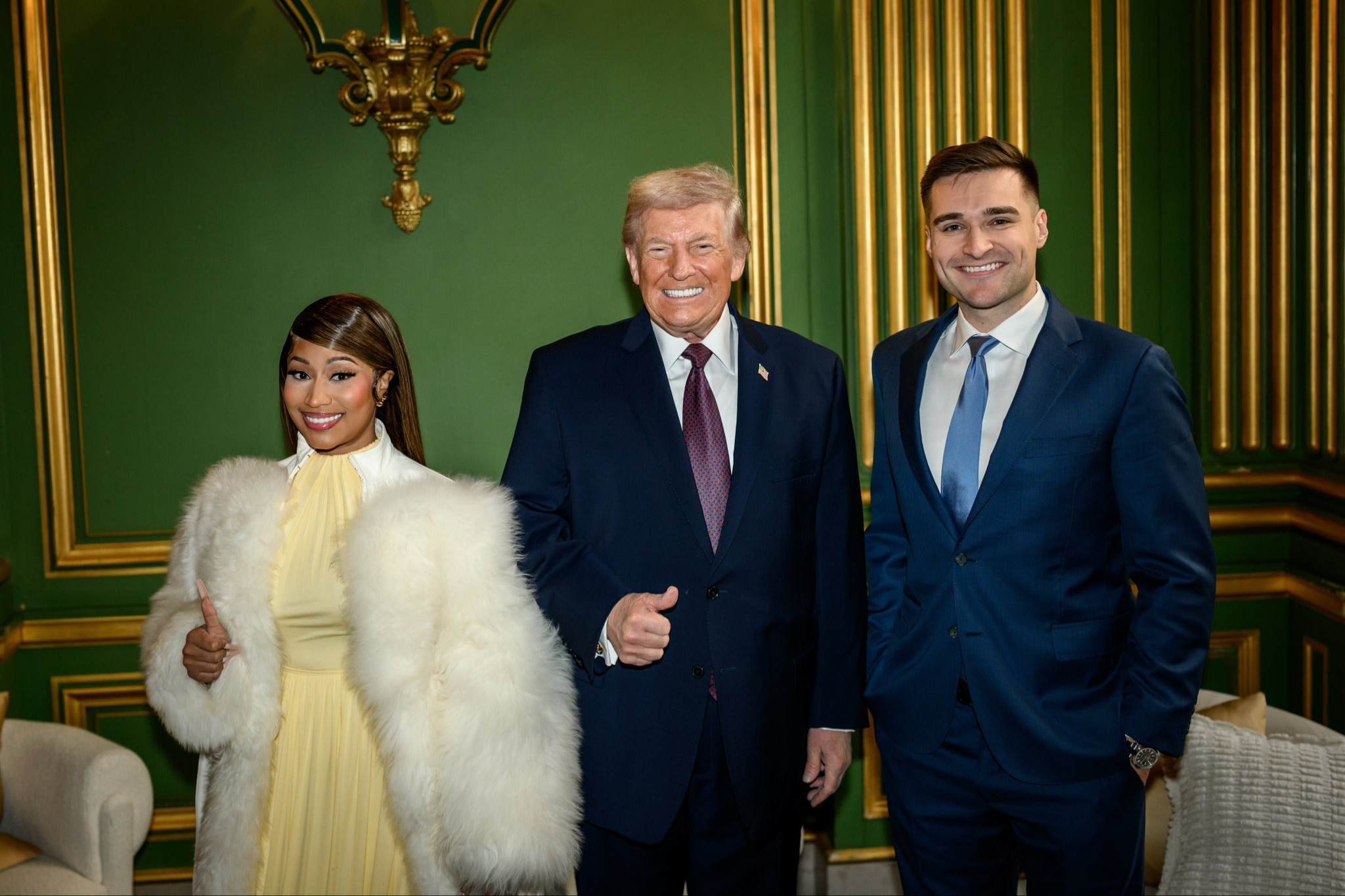
Donald Trump with Nicki Minaj & Alex Bruesewitz. Source: Wikimedia Commons
We all have a favourite celebrity. They may be an athlete, musician, actor or even a reality TV show contestant. Regardless of who they are, it’s likely they’re a reflection of your interests – football lover, for example, is more likely to be a fan of Messi than a cinephile is. However, could your favourite celebrity say more about you than meets the eye? Judging by rapper Nicki Minaj’s current controversy, the answer is yes.
Minaj has recently come under fire for publicly supporting Donald Trump, going so far as to declare herself his ‘number one fan’ at the US Treasury Department’s Trump Accounts Summit in January. For the Barbz, her extremely dedicated fanbase, this pivot could not have been more ill-timed, as the US Immigration and Customs Enforcement (ICE) continues its violent crackdown on illegal immigrants.
Minaj’s alignment with Trump has led to a large number of fans choosing to stop supporting her, particularly those in online fan communities. A common refrain of those leaving these communities is a desire to not be associated with someone whose values do not align with their own. But why would the actions of a celebrity, who is ultimately a stranger, reflect on a fan? This is due to the use of celebrities as identity signifiers in online spaces. With the rise of stan culture, online communities are increasingly built around a shared obsession with a celebrity. As this obsession becomes a key part of a person’s identity, celebrities are often used as shorthand to signal their interests, values and even political ideology. For example, an Angel (a Charli XCX fan) is likely to be party girl in line with Charli’s personal branding. Additionally, a Swiftie (a Taylor Swift fan) is likely to support the Democratic Party, following Swift’s endorsement of Kamala Harris in the 2024 Presidential election. With this context, it is clear why so many Barbz have publicly declared an end to their support for Minaj – being associated with a political ideology you are vehemently against is far from ideal.
While their approach is understandable, it is far from reasonable. The need to easily determine whether someone is ‘problematic’ is emblematic of an online culture that is obsessed with ‘virtue signalling’, rather than genuine progress. This approach has led to many online conflating supporting a celebrity with activism. This was most evident in the online response to season seven of hit reality TV show ‘Love Island USA.’ In response to the racist hate received by Michelle “Chelley” Bissainthe and Olandria Carthen, many fans positioned their support as anti-racist activism. While well-meaning, this behaviour highlights the consequences of associating values with celebrity. Supporting either contestant did not amount to anti-racist activism, with whatever positive impact that could be made being forgotten as the internet found its new topic of the week. Fans did not usher in any progress, only an undeserved sense of self-satisfaction.
Furthermore, the association of one’s values with their celebrity of choice is a largely online phenomenon. It would be unfounded to say a person who does not spend much time online and is thus unaware of what their support of Minaj may signal, agrees with her politics by default. Similar to ‘cancel culture’, this assumption leaves little room for nuance. Instead, the focus is on public shaming and social ostracization. As a result, any potential for conversations surrounding the role of celebrities in politics and social justice is overshadowed by misplaced culpability.
While it appears that your favourite celebrity may say a lot about you, especially online, its ability to signal your values has been somewhat overestimated. In an online world that moves too fast for nuance to follow, your favourite celebrity says everything about you. They are the centre you build your identity around, a shorthand only those online can understand. If you play your cards right, you can even call this activism. In the real word, this gets lost in translation. Rather than being a pillar of your identity, your favourite celebrity is just that; no more, no less. Although withdrawing support can reflect your ethics, it can also simply reflect a change of taste. Regardless, the easiest way to assess someone’s values will always be through a conversation. Asking whether they like Nicki Minaj is easier though.

.jpg)