

Escaping Modernity through Mongolia
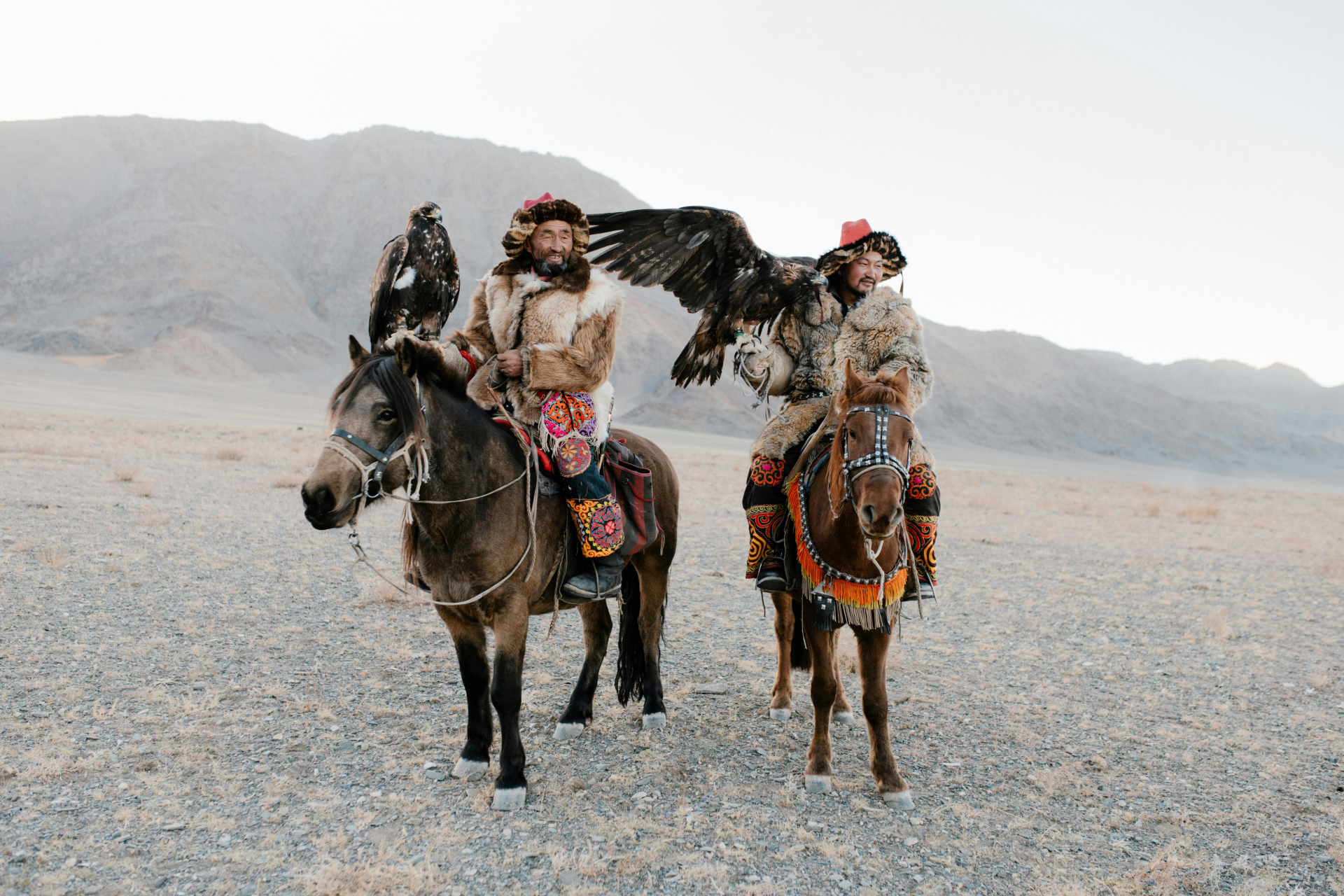
Men in the Desert Riding Horses. Source: Pexels
If your algorithm is anything like mine, your feed has likely been conquered by the Golden Horde. Memes of Genghis Khan, men throat-singing in photogenic landscapes, and the thunderous folk-metal of The HU. Mongolian culture is rapidly approaching the possibility of having its own “moment”.
This recent fascination with Mongolia is nothing unique. In the West, the socioeconomic zeitgeist is mirrored in its cultural curiosities. Each time period reflects its own collective anxieties, unfulfilled desires, and innermost fantasies.
In 1922, the discovery of Tutenkhamun's tomb sparked “Egyptomania” among the public. Following the horrors of WWI, Europeans craved luxury and optimism. Art Deco, the defining visual aesthetic of the era, took great interest in the perceived extravagance of Ancient Egypt. The discovery of the opulent pharaoh triggered the mass proliferation and appropriation of Egyptian imagery such as lotus flowers, hieroglyphics, and pyramids in everything ranging from architecture to clothing.
Moving on to the 70s, Japan was imagined as a sleek, technologically advanced utopia. The economic miracletransformed the island nation into a leading manufacturer of cars, cameras, and everything modern. Western post-war industrialist hope was captivated by neon-lit Tokyo streets, bullet trains, and Sony Walkmans. Japan became the symbol of a productive, prosperous, and endlessly innovative future. However, as the negative creep of Thatcherism and Reaganomics became more all-encompassing, films such as Blade Runner (1989) instead used techno-orientalist depictions of Japanese culture as the language of a dystopia.
More recently, the internet’s newfound fixation on China (marked by phrases like “I’m in a very Chinese time of my life”) reveals a growing disillusionment with Western institutions and the fading promise of capitalist meritocracy. Younger people are becoming increasingly dissatisfied with rising income inequality, the precarious job market, and the unlikelihood of homeownership. According to The Economist, younger people increasingly prefer China as a leading global power over the United States. Now, it’s hard to walk in central London for five minutes without seeing at least one person with the viral Adidas Tang-style jacket.
Mongolia has become the latest (albeit more niche) object of fascination. Steppe life is framed as wild and pure. Tourists are promised endless grasslands and bright skies. For many individuals, it represents an imagined escape from dependence on the internet, economic uncertainty, and the pressures of modern life. Mongolia becomes a symbol of unbounded freedom in contrast to the digital panopticon we are familiar with today.
In one view, this is undoubtedly an improved image of the country. For centuries, Mongolians were portrayed as uncivilised, barbaric savages. In the United Kingdom (and other European countries), the term “mong” is still used as a pejorative slur against people with Down Syndrome. The word traces its origins to 18th century European scientific racism which viewed Mongolians as “weak in body and spirit, bad, and lacking in virtue”.
Yet the recent infatuation with Mongolians still slips into the same orientalist tropes, casting them as noble savages who live outside modernity. The wild landscape of the country is seen as something that must be veni, vidi, vici-ed by travel bloggers before they return to their “ordinary” life.
Interestingly, this fascination isn’t limited to the United States or Europe. South Korea has also developed a growing interest in Mongol culture, visible in reality shows such as Physical: Asia and even makeup naming controversies. This suggests that the appeal of the steppe is less about countries individually and more about the broader global fatigue with hyperconnected consumerist societies. In 2025, “slop” was named Word of the Year by Merriam Webster in response to the proliferation of low-effort AI generated content.
Mongolia is thus an imagined solution to this digital burnout, urban alienation, and the pressures of contemporary life. However, such views obscure the country’s real contemporary challenges which mirror struggles faced across the globe. Currently, 40% of Mongolians are still nomadic, with the rest living in urban areas like the city of Ulaanbaatar. The modern era has presented its own difficulties such as air pollution, government corruption scandals, and rising wealth inequality. Traditional herders are especially vulnerable to the catastrophic consequences of climate change, with dzudsalone killing more than 7 million livestock in 2024. Families in rural areas are increasingly pressured to leave their way of life and instead settle in the capital city.
As a Mongolian international student living in the UK, I was usually met with a blank stare or a vague guess about "somewhere in China" a few years ago.
Today, the reaction is different. Eyes light up. People ask me if I grew up riding horses to school (I did not). They tell me they’ve been listening to Mongolian rock bands on Spotify. While it’s undeniably better to be seen than to be invisible, there is a strange discomfort in being envied for a version of your culture that is essentially a one-dimensional fantasy. It suggests that a culture’s value lies in being an "antidote" to Western burnout, rather than being a complex nation with its own complex social landscape.